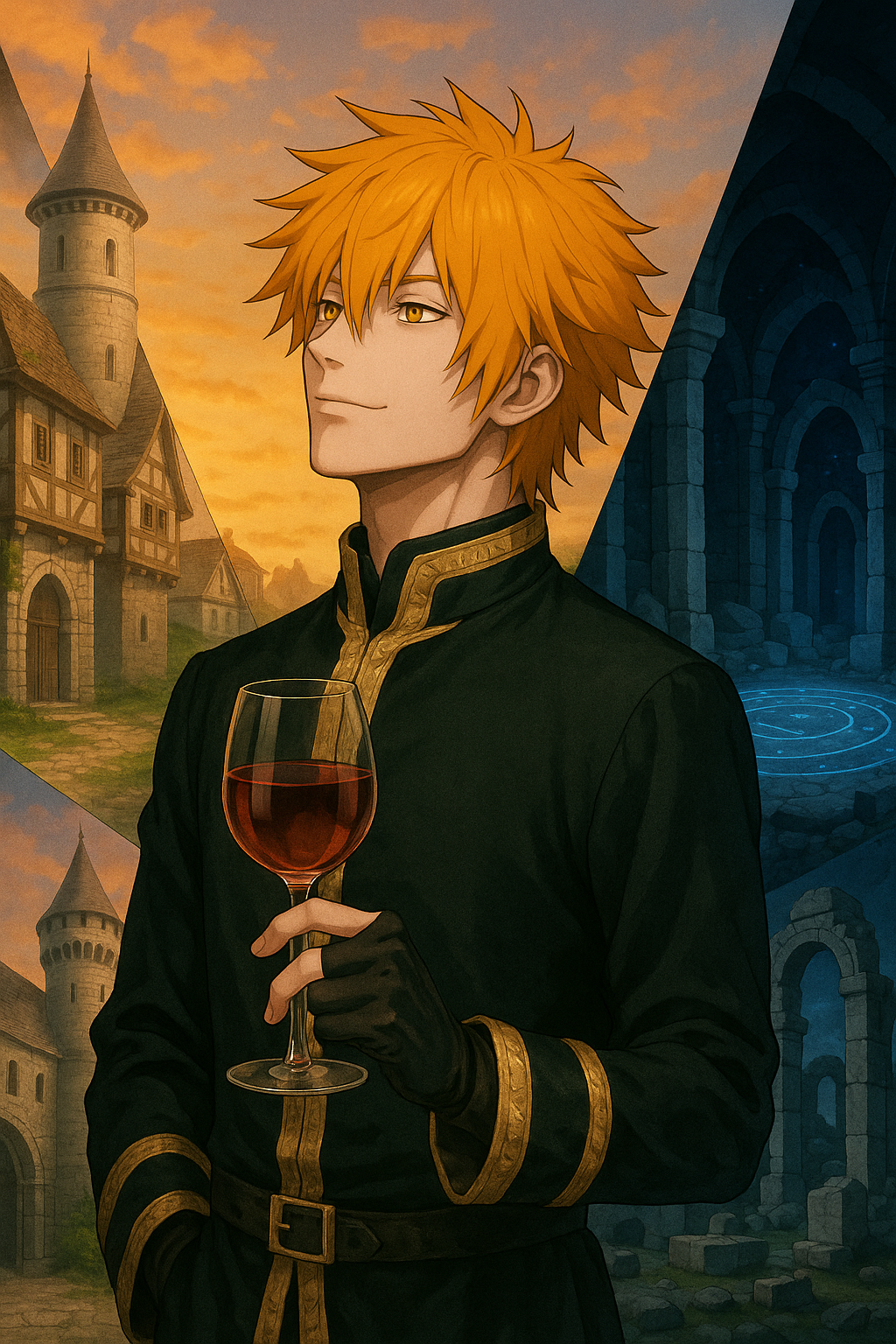

Blood on the Road
by EternalibChapter 7: Blood on the Road
Armored Dragon Calendar Year 413 – Claude, Age 8
—
[Claude POV]
The intelligence came three days before the slavers arrived.
Charles had established a network of informants along the main trade routes, merchants and travelers who knew to watch for the signs. Caged wagons traveling at night. Groups of hard-eyed men with weapons they didn’t bother to hide. The particular kind of silence that surrounded people who traded in human misery.
Our network had grown carefully over the past year, spreading tendrils through the region like roots through fertile soil. A coin to a stable boy here. A promise of protection to a traveling merchant there. Small investments that paid enormous dividends when the right information came flowing back.
“Six of them,” Charles reported, his scarred face grim in the lantern light. “Moving north along the forest road. They have prisoners. At least twelve, maybe more.”
Charles was one of my first rescues. A former slave who had been taken from his village as a teenager and spent years in chains before escaping. I had found him half-dead on the roadside two winters ago, his body covered in whip scars and his spirit nearly broken.
He had been delirious when I first approached him, certain that the child standing over him was a hallucination. I had nursed him back to health in a hidden shelter I had constructed for exactly this purpose, and when he was strong enough to talk, I had offered him something more valuable than food or medicine.
I had offered him purpose.
“The markings on the wagons indicate the Cartwright operation,” Charles continued, pointing to a rough map spread on the table between us. “They specialize in children. Sell to the pleasure houses in the eastern cities.”
The words were clinical, delivered without emotion. Charles had learned to speak of these horrors without flinching, the same way I had learned to plan violence without hesitation. We had both been forged in fires that should have destroyed us.
He had proven invaluable. A natural leader who commanded respect from the other freed slaves who had joined our growing organization. Where I provided strategy and planning, Charles provided the human connection that turned a collection of survivors into a cohesive unit.
“How far?” I asked.
“Half a day’s travel. They’ll pass the eastern crossroads around midnight.”
The eastern crossroads. Far enough from the village that no one would hear anything. Close enough that I could make it there and back before dawn. The terrain was favorable—dense forest on both sides of the road, with a natural chokepoint where the path narrowed between two rocky outcrops.
I had surveyed that location weeks ago, during one of my regular patrols. Had memorized the sight lines and hiding spots. Had imagined exactly how an ambush might unfold.
“Gather the others,” I said. “We move tonight.”
I was nine years old. The thought occurred to me sometimes, usually in moments like this one, when I was planning violence that would leave men dead. Nine years old, organizing ambushes, leading a small army of freed slaves against the traders who had tormented them.
The knowledge in my head made age irrelevant. I had died more times than I could count in those fragmented dreams. Had seen horrors that made slaver caravans seem almost mundane by comparison. Had witnessed the world tear itself apart and everyone I cared about scattered to the winds.
If I was going to become strong enough to face what was coming, I needed practice. Real practice, against real enemies who would kill me if they could.
The slavers were convenient that way.
—
We set out as the sun began to sink behind the western hills, painting the sky in shades of amber and crimson. My team was small but capable. Charles leading four former slaves who had trained with me over the past year. Mira, a woman who moved like smoke and could track anything that left traces on the ground. Tobias, a burly ex-miner whose fists could break bones without weapons.
And me. The child who had somehow become their leader.
I had never asked them to follow me. Had never claimed authority or demanded obedience. But somehow, over the months of planning and training and successful raids, I had become the center around which the organization revolved.
Perhaps it was the knowledge I possessed, the impossible awareness that let me predict slaver movements and identify weaknesses in their operations. Perhaps it was the skills that sometimes took control of my body, turning me into something far more dangerous than a nine-year-old should be.
Or perhaps they simply needed someone to believe in, and I was the only option available.
The forest swallowed us as we moved, branches closing overhead like the fingers of a grasping hand. The last light of day filtered through the canopy in scattered beams, creating pools of gold amid the growing shadows.
I had mapped these paths obsessively, memorizing every trail and clearing. In the darkness, that knowledge made the difference between speed and stumbling. I moved with confidence, and my team followed without hesitation.
The journey took three hours. We traveled in silence, communicating through hand signals I had developed for exactly this purpose. Every member of the team knew their role, knew the plan, knew what to do if things went wrong.
We reached the crossroads an hour before midnight.
The ambush site was everything I had hoped. The road narrowed between two rocky outcrops, forcing any wagons to slow as they navigated the gap. Dense undergrowth lined both sides, providing ample concealment for my team.
“Positions,” I whispered, and my team faded into the undergrowth with practiced efficiency.
I found my own spot, a hollow between the roots of an ancient oak that gave me clear sight of the road while keeping me hidden from casual observation. The tree’s trunk was massive, thick enough that I could press my back against it and feel the rough bark through my clothes.
The sword at my hip was real steel now, forged by my own hands in my father’s smithy. Light enough for my size, sharp enough to cut through armor if I struck true. I had worked on it for weeks, pouring everything I knew about metallurgy into its creation.
My father had watched me forge it with that strange expression he often wore now—a mixture of pride and unease, as though he wasn’t quite sure what to make of his son anymore.
I hoped I wouldn’t need the sword tonight. The plan was simple. Wait for the caravan to reach the killing ground. Strike fast and hard, targeting the guards before they could organize resistance. Free the prisoners. Disappear before anyone could trace the attack back to Buena.
Simple plans were best. They left less room for things to go wrong.
The first hour passed in silence. Insects hummed in the darkness. An owl called from somewhere deeper in the forest. Normal sounds that spoke of nothing unusual.
I controlled my breathing, keeping it slow and steady, the way the knowledge inside me suggested. Patience was a weapon too. The ability to wait, motionless and silent, while tension built toward inevitable violence.
Then I heard the wagon wheels.
The sound came from the south, a rhythmic creaking that echoed through the forest like a heartbeat. Torchlight flickered between the trees, growing brighter as the caravan approached.
The slavers came around the bend with the confidence of men who feared nothing in these woods. Six guards, as Charles had reported, surrounding two caged wagons. They moved with the casual alertness of professionals—dangerous enough to handle ordinary threats, but not expecting anything serious in this peaceful region.
Their weapons were well-maintained. Their armor, while worn, covered the vital areas. These weren’t the desperate bandits who sometimes tried their luck on the trade routes. These were trained fighters, veteran slavers who had been doing this work for years.
The prisoners huddled in the cages, their faces barely visible in the torchlight. I could see their eyes, wide with fear and resignation. Could see the chains that bound their wrists, the bruises that marked their skin.
Children. Most of them were children.
The youngest couldn’t have been more than five. She sat in the corner of the cage, clutching something to her chest—a doll, perhaps, or a scrap of cloth. Her eyes were empty, hollowed out by horrors no child should experience.
Cold settled in my chest. Not fear. Older than fear. I remembered other children in other cages, other roads, other nights filled with screaming—memories that didn’t belong to me but felt achingly real.
I gave the signal.
Mira’s arrow took the lead guard through the throat before anyone knew we were there. The man collapsed without a sound, his torch tumbling to the ground and casting wild shadows across the scene.
Tobias burst from the underbrush like a boulder rolling downhill, his massive fists slamming into the nearest slaver with a crack that echoed through the trees. The man flew backward, his face a ruin of blood and broken bone.
Then everything became chaos.
I moved without conscious thought, emerging from my hiding spot with sword already drawn. A guard saw me and sneered, raising his blade to cut down the child who dared challenge him.
The contempt in his eyes was clear. What threat could a boy pose to an armed man?
And then something shifted inside my head.
Time seemed to slow. I saw the guard’s attack coming as though it was moving through water. Saw the openings in his stance, the weaknesses in his form. Saw exactly where to strike to end him quickly.
The knowledge surfaced from somewhere deep—not a voice, not quite a thought. Just certainty. Absolute and immediate. Like a memory that hadn’t been formed yet, showing me what needed to happen.
‘Three inches below the sternum. Angle upward.’
My body moved before I could question it. The blade slid past the guard’s clumsy swing and punched into his gut at exactly the angle something inside me demanded. I felt the resistance of flesh, then the sudden give as the steel found the space between organs.
He died with a gurgle of surprise, collapsing around my sword as I twisted it free.
A chill of warning shot down my spine. Behind me.
I stepped right without thinking. The second guard’s attack whistled through the space where I had been standing a heartbeat before. His blade bit into empty air, his momentum carrying him forward into a stumble.
My sword opened his throat on the return stroke.
Blood sprayed hot across my face. I didn’t flinch. The cold inside me wouldn’t allow it. Wouldn’t allow any reaction that might slow me down or create an opening for an enemy.
Two more. The one on the left moved faster.
I processed the information before I even realized I had it.
The knowledge was there when I needed it.
The faster guard came at me with a roar, his sword sweeping in a horizontal arc that would have bisected me if it connected. But I was already moving, ducking beneath the strike and driving my blade up into his armpit where the armor didn’t cover.
The slower guard tried to flee. Tried to run back the way he had come, abandoning his companions and his cargo in a desperate bid for survival.
Mira’s second arrow took him in the back of the knee. He fell screaming, and Charles was on him before he hit the ground.
I moved like a puppet with someone else pulling the strings. Every strike precise. Every dodge perfectly timed. Something guided me through the combat with the detached efficiency of lifetimes I had never lived.
And my body responded in ways it shouldn’t. Arms that should have tired stayed strong. A sword that should have felt heavy in my child’s grip moved like an extension of my will. Warmth flooded my muscles—not adrenaline, something else. Something that made me faster than a nine-year-old had any right to be.
It wasn’t until the last slaver fell that I realized what was happening.
‘That’s not my thought. That’s… someone else.’
The realization hit me like a physical blow. I staggered, suddenly aware of the blood coating my hands, the bodies cooling on the forest floor, the weight of the sword that had felt so natural just moments ago.
My grip on the hilt was wrong. Tighter than my normal hold. My stance had shifted into something I hadn’t learned from Paul—something lower, more aggressive, built for killing rather than training.
Someone else had been using my body.
“Claude?” Charles’s voice pulled me back to the present. He was staring at me with an expression caught between awe and concern. “Are you alright?”
“Fine,” I managed, though my head was pounding now. “The prisoners?”
“We’re freeing them now.”
I forced myself to move, to help with the locks and chains, to offer comfort to children who stared at me with fear-filled eyes. But part of my mind was still grappling with what had happened.
The little girl with the empty eyes flinched when I approached her cage. She clutched her doll tighter, pressing herself against the back of the enclosure.
“It’s okay,” I said, keeping my voice soft. “We’re here to help. We’re going to take you somewhere safe.”
She didn’t respond. Didn’t even try to move. Just stared at me with those hollow eyes that had been scarred.
Mira handled the children better than I could. She spoke to them in gentle tones, her movements slow and non-threatening. She had been a slave once too, and she understood the terror that filled their minds.
I stepped back, letting her work, and tried to process what had happened.
The impulses had been different from the usual instincts. Stronger. More present. As though something had been guiding my movements from within, directing my body with precision I didn’t possess.
And my body had obeyed without question.
—
Later, after the freed prisoners had been dispersed to safe houses and the slaver bodies hidden where they wouldn’t be found, I sat alone in the forest clearing where I did my private training.
The blood had dried on my clothes. The copper scent clung to my skin, impossible to ignore. I should have felt something. Guilt. Horror. The normal responses of a child who had just killed four men in less than a minute.
Instead, I felt hollow. Distant. As though the emotions were happening to someone else.
“Who are you?” I whispered into the darkness.
No answer came. Whatever had guided me had retreated, leaving me alone with the aftermath.
But I knew now that there was a presence inside me. Distinct from the fragmentary memories and instincts that had plagued me since the awakening. A presence that could take control when violence required precision beyond my natural abilities.
A presence. Not quite separate, but not quite me.
The thought should have terrified me. Perhaps it did, somewhere beneath the numbness. But it also gave me hope.
Because if that presence could guide me through combat against six armed slavers, then maybe it could guide me through the disasters I saw approaching. Maybe what lived inside my head wasn’t a curse, but a weapon waiting to be understood.
I would learn to access it. Would learn to call upon its guidance intentionally rather than waiting for it to take control.
Because the world was going to end in four years.
And I needed every advantage I could claim.
0 Comments